
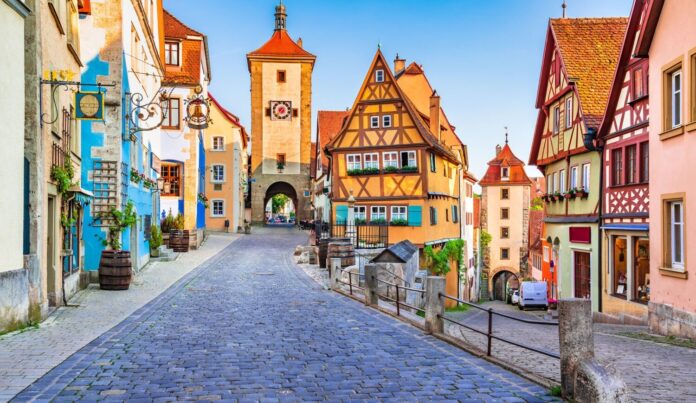
There’s a moment that happens in certain places in Germany. You turn a corner, and suddenly everything feels staged in the best possible way. Timber-framed houses lean just slightly, flower boxes spill over like they were placed there on purpose, and the street goes quiet in a way that feels almost intentional.
Germany’s small towns have this strange ability to feel cinematic without trying. It’s not polished perfection. It’s more like time slowed down and decided to stay. If you’ve ever wanted to step into a place that looks like a film set but feels real under your feet, this is where you start.
Why German Small Towns Feel Like Movie Sets
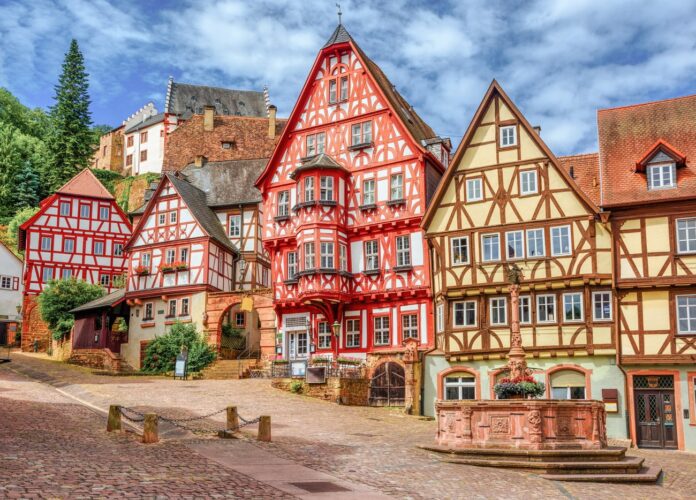
There’s a reason filmmakers keep coming back here. These towns didn’t rebuild themselves into something modern and convenient. They simply stayed the way they were, and that makes all the difference.
Even in bigger cities like Munich, you’ll notice the contrast.
One moment you’re in a lively urban space, maybe even noticing something unexpected like a discreet listing for a München escort, and then just an hour later, you’re somewhere completely different. A place where the air feels older, quieter, and oddly familiar.
Many German towns have preserved medieval layouts, including cobblestone streets and half-timbered houses, which is why they often feel like stepping into another century.
That continuity is what makes them feel cinematic.
Rothenburg ob der Tauber: The One You’ve Already Seen
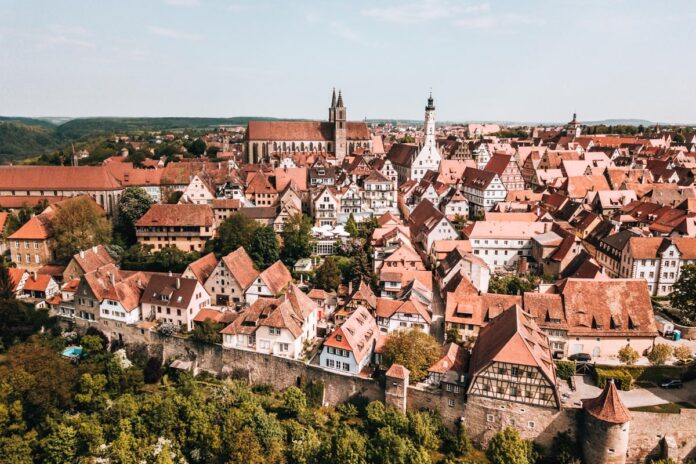
If there’s one town that feels like it belongs in a film, it’s Rothenburg ob der Tauber. Even if you don’t recognize the name, you’ve seen it somewhere.
Walking through it feels almost unreal at first. The streets are narrow, the colors are soft, and everything seems carefully placed, even though it isn’t. The town still has its medieval walls intact, which is rare, and you can actually walk along them and look out over the rooftops.
There’s a famous little corner called Plönlein where two streets split around a tilted house. It’s one of the most photographed spots in Germany, and when you see it in person, you understand why.
It feels suspended, like time paused here and forgot to move again.
Quedlinburg: Where History Feels Alive
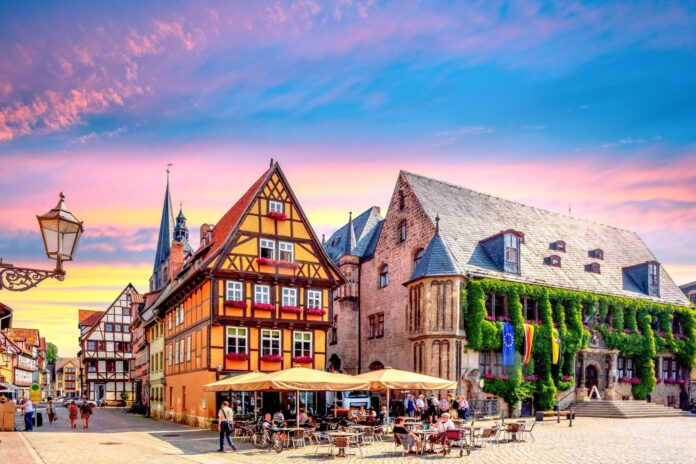
The town is packed with over a thousand half-timbered houses, each slightly different, each leaning just enough to feel alive. Walking through its streets feels less like sightseeing and more like wandering through layers of time.
What Makes It So Cinematic
- The uneven streets that twist without warning
- The mix of colors that somehow never feels chaotic
- The silence in certain corners, especially early morning
It’s also a UNESCO World Heritage Site, which tells you something about how carefully preserved it is.
But honestly, that’s not what stays with you. It’s the feeling that every building has seen something.
Meersburg: A Town Between Water and Time
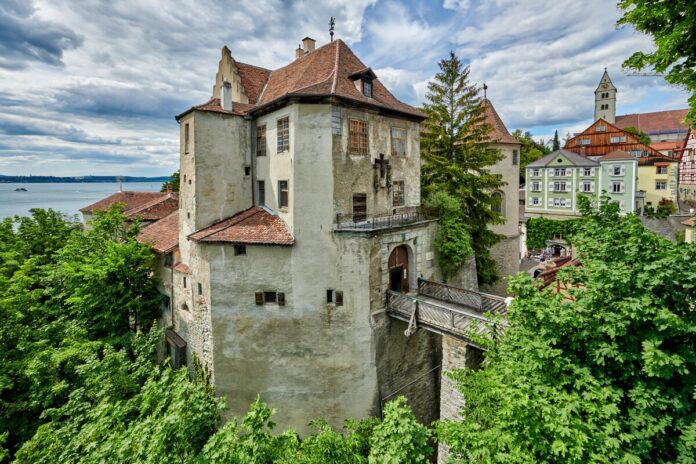
Meersburg sits right on Lake Constance, and there’s something about that combination of water and old architecture that makes everything softer.
The upper town and lower town are mostly pedestrian, so there’s no rush of traffic, no interruptions.
A Quick Look at What Defines Meersburg
| Feature | Why It Feels Cinematic |
| Old Castle | Dates back to the 7th century, still standing |
| New Castle | Pale colors that glow in sunlight |
| Lake Views | Constant shifting light and reflections |
There are two castles here, which already sounds like something out of a script. One older, darker, more grounded. The other lighter, almost theatrical.
And then there’s the lake, which changes everything. It adds movement to an otherwise still place.
Monschau: The Quiet Drama of a Valley Town
Tucked into a valley, Monschau wraps around a river in a way that feels deliberate. The houses sit close together, almost protective, and the bridges connect everything in a way that feels more emotional than practical.
There’s a rhythm here that’s hard to explain. Maybe it’s the sound of water, or the way the light drops into the valley in the evening.
Did you know?
Monschau is especially popular in winter, when lights reflect off the river and the entire town feels like a slow-moving scene rather than a destination.
It’s not dramatic in an obvious way. It’s quieter than that. And that’s exactly why it works.
Schiltach: The Black Forest’s Hidden Frame
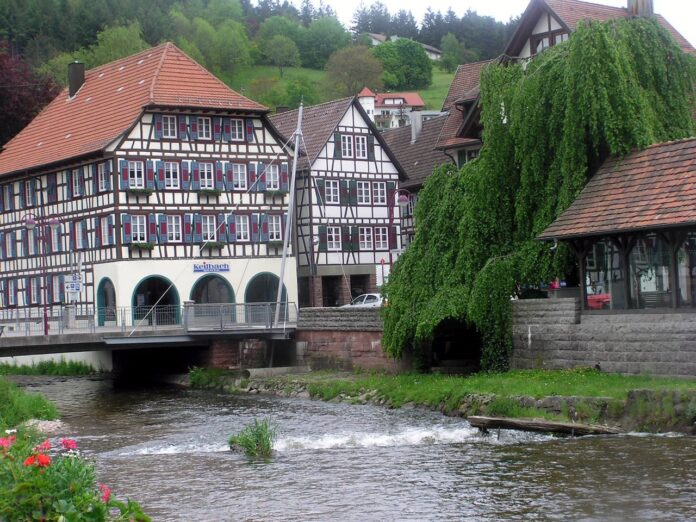
The town sits right in the Black Forest, surrounded by deep green hills that make everything feel enclosed, like a set designed to keep you focused on what’s inside.
The houses here are classic half-timbered structures, painted in soft colors, with flowers placed just enough to feel intentional but not staged.
The Black Forest region adds a natural backdrop that enhances the fairytale-like atmosphere of towns like Schiltach.
You walk through it slowly, not because you have to, but because speeding up would feel wrong.
Cochem: Where the Landscape Takes Over
The castle rises above the town in a way that feels almost exaggerated, like someone placed it there to make a point. Below it, the Moselle River curves gently, reflecting everything back in a softer version.
What Stands Out Immediately
- The steep vineyards climbing the hills
- The castle overlooking everything
- The way the town seems small compared to its surroundings
Cochem isn’t quiet in the same way as the others. It’s more alive, but still somehow calm. That balance is what makes it feel cinematic.
What Makes These Towns Stay With You
It’s easy to list places. It’s harder to explain why they stay with you.
In Germany, these small towns don’t guide you through a perfect experience. They just exist in a way that feels complete.
You notice small things. A street that curves out of sight. The sound of footsteps echoing a little longer than expected.
And then, later, you realize that’s what made it feel like a film: the pacing. The way everything unfolded.
And once you notice it, you start looking for it everywhere.